 ×
×

Case Study
From sample bag
to 315% sales growth
How a small coffee brand turned customer feedback into a continuous growth engine — in real time.
The Brand
A coffee built on aroma and community
Celetino is a specialty coffee brand roasted on the Portuguese coast. Their offering is distinctive — flavoured whole-bean coffees with a strong sensory identity, sold in kraft pouches that carry the brand's warmth right into the customer's hands.
Like many emerging artisan brands, Celetino faced a classic challenge: getting honest, actionable feedback from real customers — fast enough to actually use it.
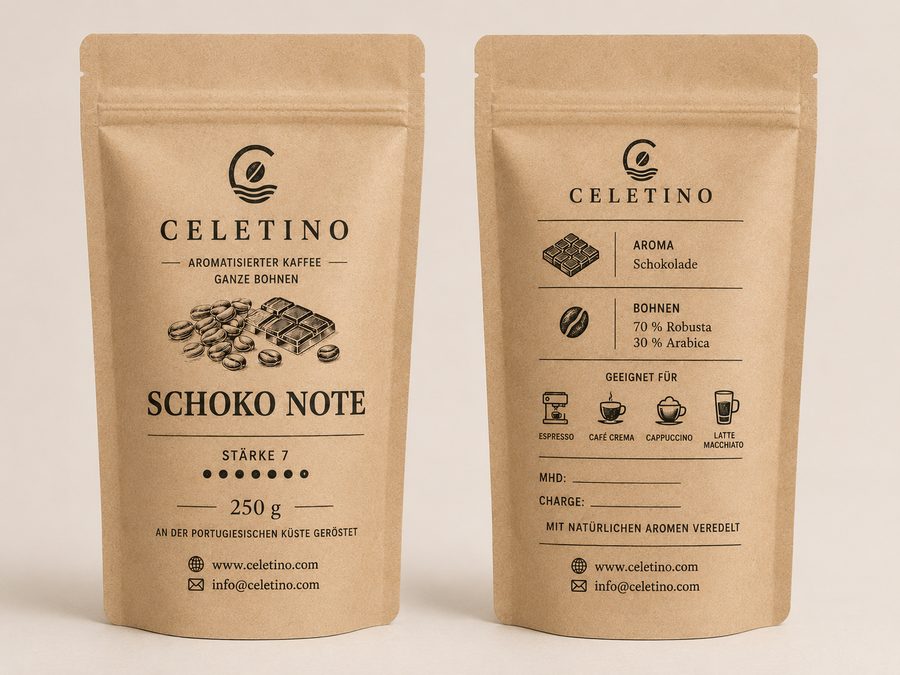
Celetino's Schoko Note blend — whole bean, roasted on the Portuguese coast. Strength 7, 70% Robusta / 30% Arabica.
The Approach
A feedback loop that fits in a sample bag
Celetino partnered with Addvising to build a feedback system that was frictionless by design. Each sample pack included a simple card inviting customers to scan a QR code, try the coffee with friends, and share their honest impression.
The process was built for real life — quick to scan, easy to complete, and woven into the natural ritual of brewing and sharing coffee.
Try the sample
Customers received a pack with a QR code printed directly on the insert card.
Test it together
Celetino encouraged sharing — making feedback social and generating richer, more honest responses.
Scan & respond
One scan opened a short Addvising survey. No app, no login — the barrier was nearly zero.
Insights in minutes
Addvising processed responses in real time — surfacing patterns and recommendations as the event was still unfolding.
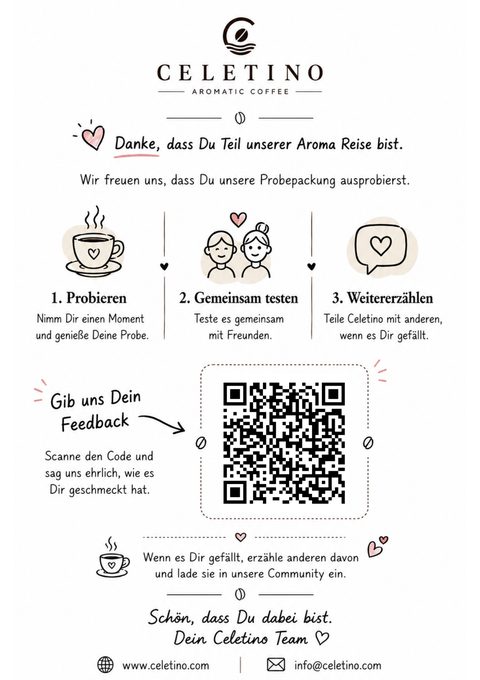
The insert card included in each Celetino sample pack — thank-you message, three-step guide, and Addvising QR code.
What the Data Revealed
Three signals, discovered in real time
Within minutes of the first responses coming in, Addvising generated an initial report. The Celetino team could read customer sentiment during the event itself — not days later. Three clear insights emerged:
Insight 01
High Product Satisfaction
Customers praised the aroma profile and smooth texture. The correlation between satisfaction and brand loyalty was strong — quality perception directly drives repeat purchase intent.
Insight 02
Questions About Roast Intensity
A subset of customers noted the roast could feel slightly bitter — pointing to an opportunity for a lighter profile or better brew guidance for those less familiar with Robusta blends.
Insight 03
Strong Brand Loyalty
Almost all respondents planned to keep buying, independent of whether they had recommended the product to others. The brand had already earned a loyal core among first-time samplers.
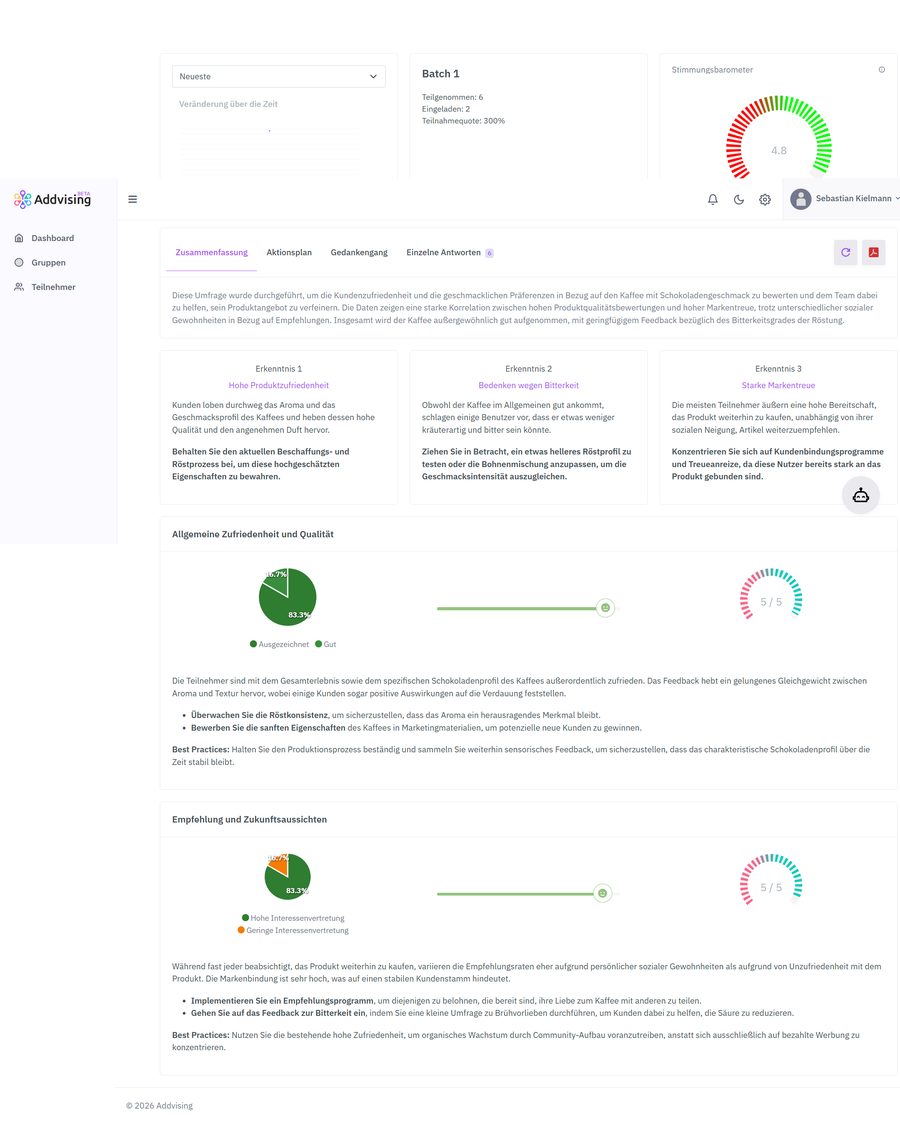
The Addvising Pulseview dashboard — sentiment score 4.8 / 5, three key insights, and prioritised recommendations for Batch 1.
What Changed
Six areas improved. One number said it all.
Armed with live data, Celetino acted across the business. Feedback became part of their product development rhythm — informing decisions from roast profile to how they told their story at events.
A 32% feedback rate — driven purely by simplicity, with no incentives — confirmed that customers are eager to engage when the process asks almost nothing of them. Seeing responses arrive live also let the team tighten their brand story on the spot, in real time.
"After implementing improvements based on Addvising insights, Celetino increased sales by over 315 percent within just a few weeks."Adelino Manuel dos Santos — Founder, Celetino
Celetino's story shows what's possible when customer feedback stops being a lagging metric and becomes a live input to every product and communication decision. The infrastructure was simple. The impact was not.